Metal Nanoparticles of Different Shapes for Pharmaceutical and Molecular Diagnostics Applications
Synthesis, characterization, and application of metal nanoparticles of different shapes for anti-cancer, antibiotic, novel pharmaceutical drugs, and molecular diagnostics applications.




Helping Biomedical, Healthcare, and Pharmaceutical Industries — and Academic & Government Researchers.
Nanoparticle shape directly controls surface area, optical response, catalytic activity, and biological interactions. By precisely tuning these parameters, we help partners unlock better performance in drug delivery, biosensing, and chemical synthesis.
What We Do
Synthesis & characterization
Synthesize and characterize metal nanoparticles of different shapes, with focus on platinum, palladium, rhodium, gold, and silver.
Anti-cancer testing
Conduct tests to determine the effectiveness of several metal-nanoparticle-based anti-cancer drug candidates.
Anti-cancer commercialization
Supply the most effective nanoparticle-based anti-cancer drugs to pharma, biomedical, healthcare, life science, academic, and government researchers.
Antibiotic testing
Conduct tests to determine the effectiveness of several metal-nanoparticle-based antibiotic drugs.
Antibiotic commercialization
Supply the most effective nanoparticle-based antibiotics to pharma, biomedical, healthcare, life science, academic, and government researchers.
Nanocatalysts for novel drugs
Create novel metal-nanoparticle-based nanocatalysts for the synthesis of new pharmaceutical drugs.
Novel drug commercialization
Sell these novel pharmaceutical drugs to biomedical, healthcare, life science, academic, and government researchers.
Molecular diagnostic substrates
Create novel nanoparticle-based substrates for molecular diagnostics applications.
Detection optimization
Determine the best sets of nanoparticles to detect the lowest levels of medically relevant proteins, bacteria, and viruses.
Particle Applications
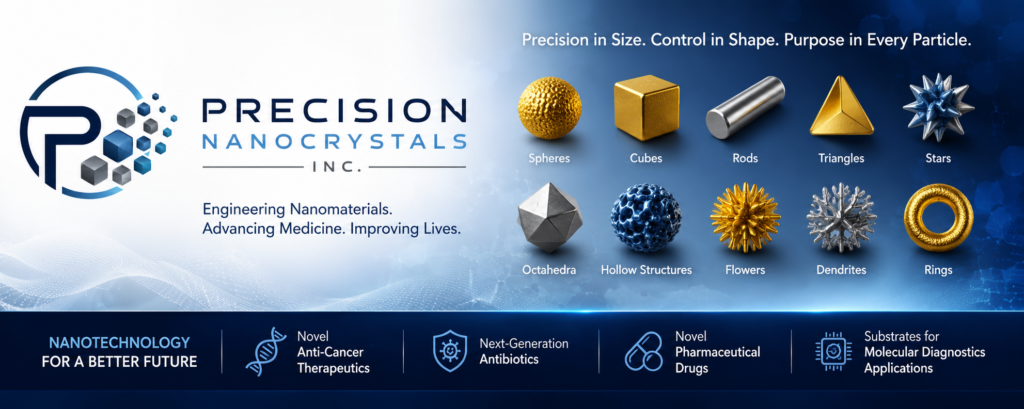
Anti-cancer therapeutics
Shape-tuned platinum, gold, and silver nanoparticles are engineered to improve drug loading, tumor targeting, and selective toxicity against cancer cells while reducing off-target effects.
Next-generation antibiotics
Metal nanoparticles can disrupt bacterial membranes and potentiate existing antibiotics, offering a promising strategy against resistant pathogens.
Catalysis for novel drugs
Nanocatalysts with well-defined facets accelerate selective reactions, enabling greener routes to active pharmaceutical ingredients and new chemical entities.
Shape-controlled nanoparticles across pharma & diagnostics.
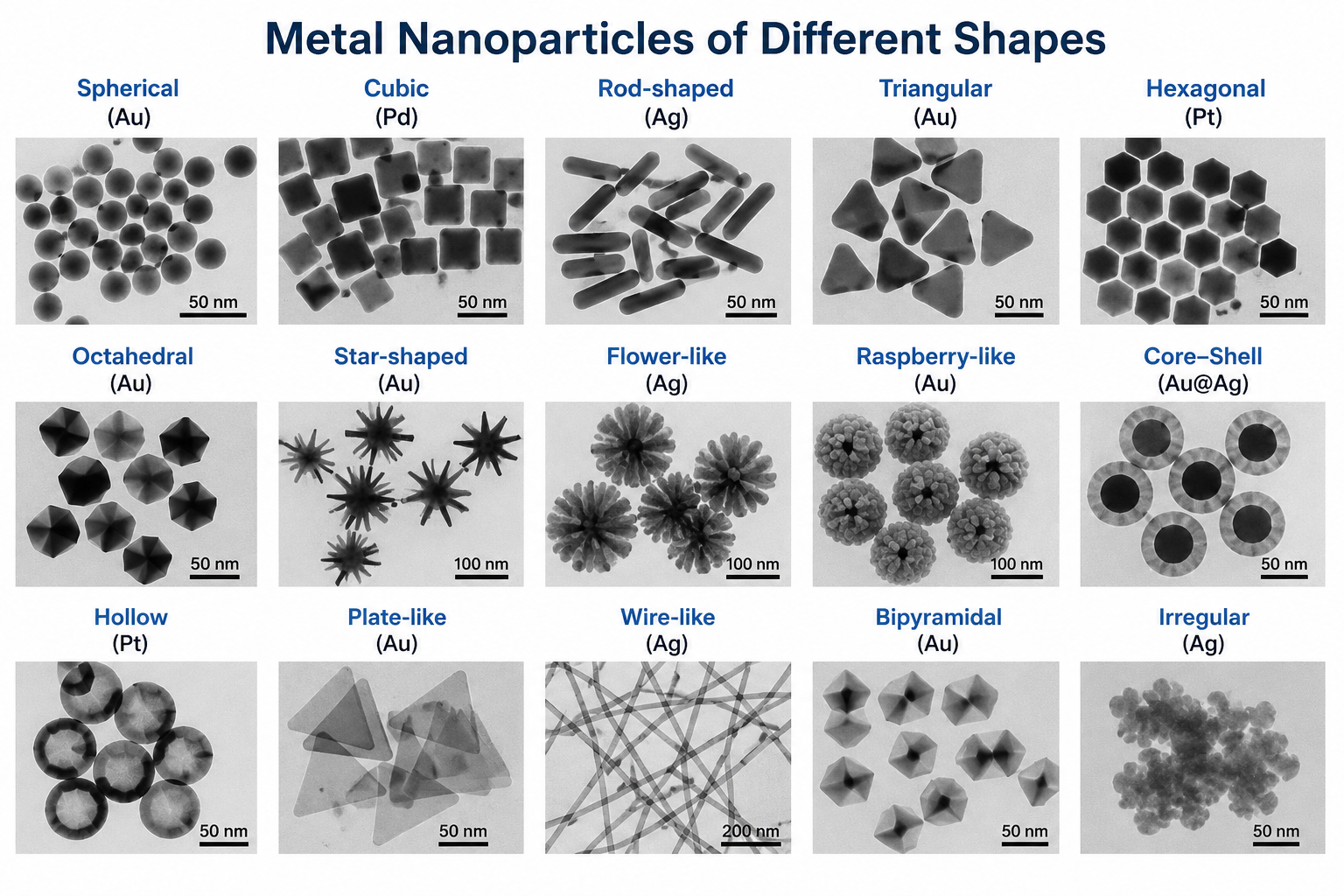
Illustrative computer-generated TEM-style images.